Mouse Removal in Spring Hill: Mice Out of Kitchens, Garages & Walls
Mice slip through gaps the size of a dime, nest in warm hidden spaces and multiply. We find where they live, remove them, and close the gaps they use.

How mice get in and where they hide
House mice are far smaller than rats. Pest companies commonly cite a gap about the size of a dime as enough for a mouse. They enter around pipes, door sweeps, garage door seals, vents and cracks near the foundation, then nest in wall voids, cabinets, under appliances and in stored boxes with shredded paper, fabric or insulation.
Mouse droppings are small, close to a grain of rice, and turn up in drawers, pantries and along baseboards. Other signs include light scratching in walls at night, gnawed packaging, smears along baseboards and a musky smell.
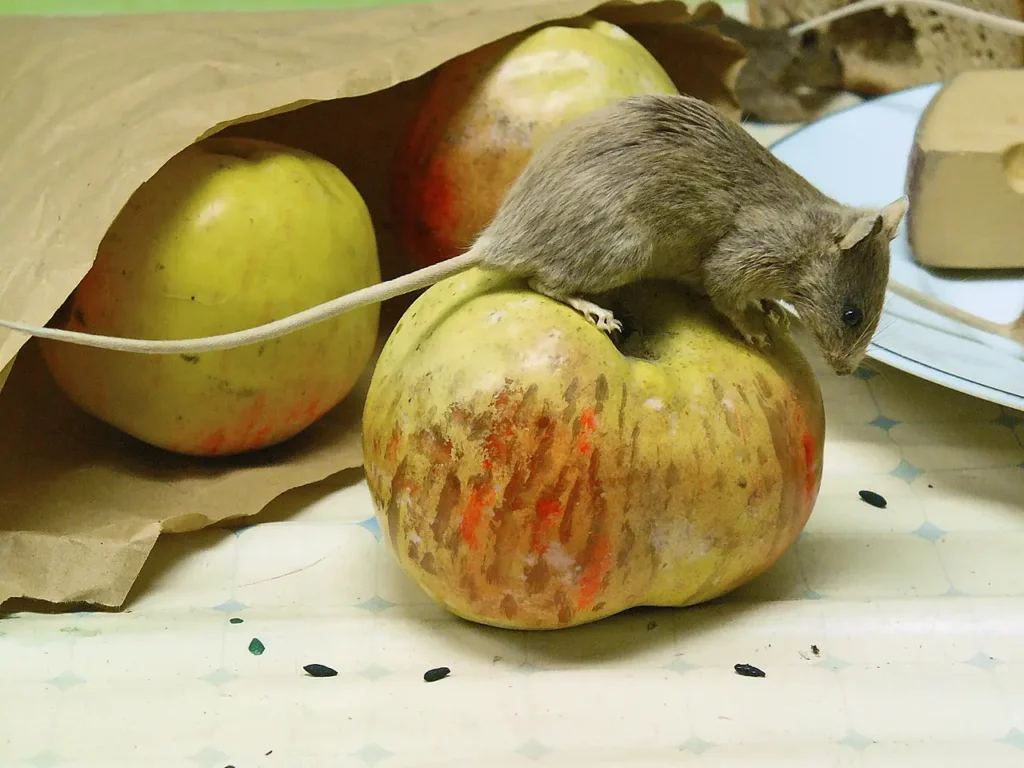
Our mouse removal process
- Inspect the inside and outside. Kitchens, pantries, garages, laundry rooms, attics and the exterior gaps mice use.
- Trap in the right spots. Snap traps go along walls and behind appliances where mice run, often in pairs, with the trigger toward the wall.
- Remove food and nesting sources. Sealed containers, cleared clutter and sanitized surfaces.
- Seal the gaps. Steel mesh, metal flashing and sealant close what mice squeeze through. See exclusion.
- Check again. One caught mouse doesn’t always mean the job is done, so we confirm activity has stopped.
Mouse removal in Spring Hill, FL
In Spring Hill, FL, house mice turn up in garages, kitchens, pantries and appliance voids, often alongside roof rats in the attic, so we check both. Each state’s plan accounts for the species and the building style.
Mistakes that make mouse problems last
- Setting one trap and assuming that is all of them
- Using poison inside walls, where mice can die out of reach
- Leaving pet food, bird seed or pantry boxes open
- Patching only the gap you can see
- Sealing before the mice are out
Health and food safety
Mice contaminate food and surfaces with droppings and urine, and Florida Health lists salmonella among diseases associated with rodents. Throw away chewed food, wet-clean affected areas, wear gloves, and don’t sweep dry droppings. Our cleanup and sanitation service covers heavy contamination.
Related rodent control services
Mouse Removal questions
I caught one mouse. Is it over?
Often not. Mice live in groups and breed quickly, so one catch can be the first of several. Keep traps out and watch for new droppings or noise.
Where do mice nest in a house?
Wall voids, cabinets, under appliances, in garages and attics, and in stored boxes, using shredded paper, fabric and insulation.
How small a gap can a mouse use?
Pest-control companies commonly cite a hole about the size of a dime. That is why a full exterior inspection matters.
Are glue boards or poison a good idea?
Snap traps and sealing are preferred. Poison can leave dead mice inside walls, and we avoid scattering bait indoors.
Do you handle mice in Spring Hill?
Yes, in Spring Hill, Florida, including garages, kitchens, attics and crawl spaces.
Hear scratching tonight? Let’s find out what it is.
Call and tell us where you are and what you are hearing, seeing or smelling. A local rodent specialist can then set up an inspection of your attic, crawl space, garage and exterior.
Talk to a local rodent specialist now
- Open 7 days a week, 9:00 am to 5:00 pm
- Spring Hill, Brooksville, Weeki Wachee and nearby
- Rats, mice, attic and crawl space problems